Octave
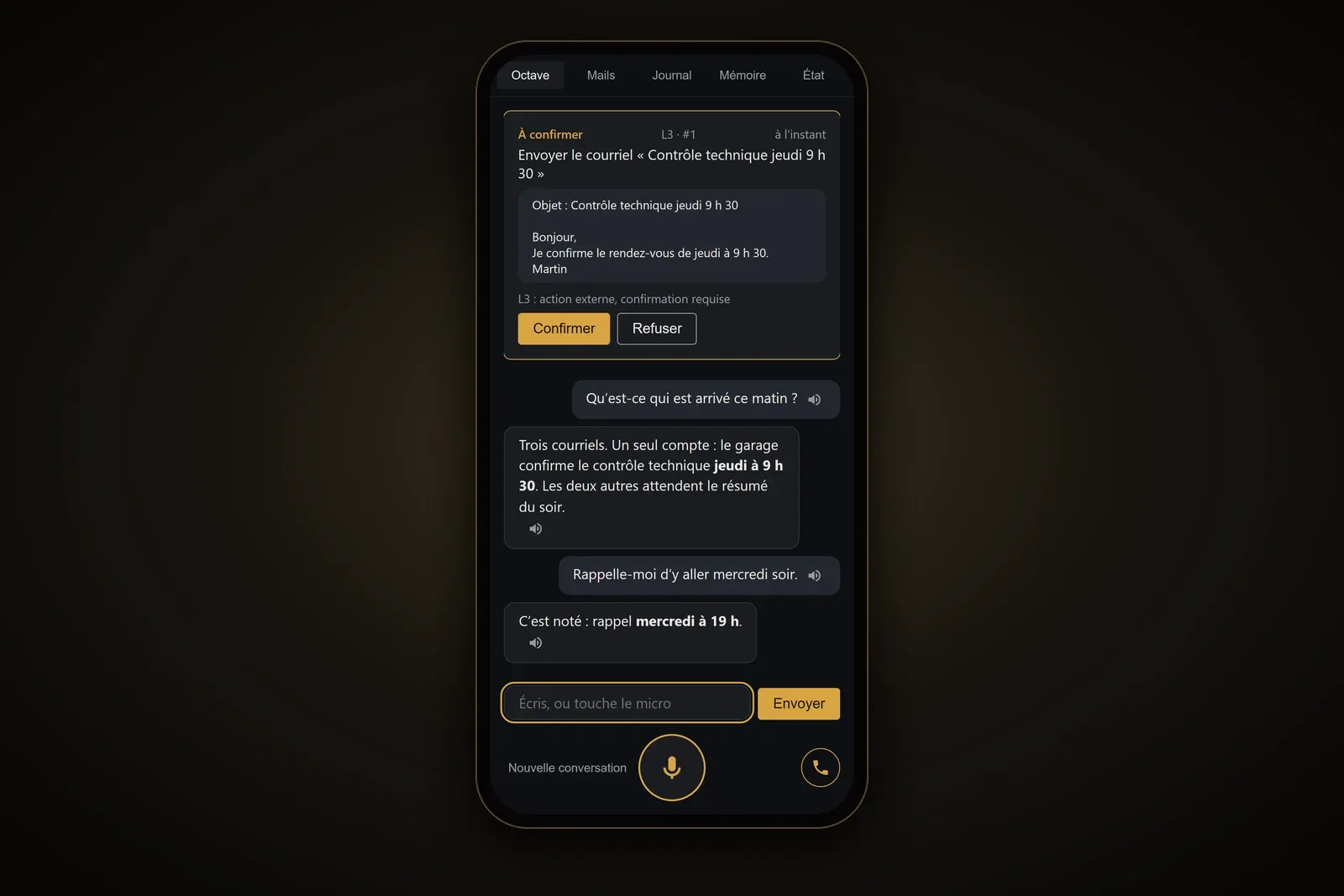
A personal assistant reached from a phone, in writing or by voice: it reads incoming email, flags what matters, and never acts without approval.
A Node and TypeScript service that runs continuously on a laptop, and an app opened from a phone.
The repository kept its working name, assistant; the product is called Octave.
The first job is the most thankless one: read every email that arrives, across several inboxes, so as not to have to. A cheap model sorts each message into “tell me now” or “keep it for the digest”, and only the first case makes the phone buzz.
The second is conversation. You type, dictate, or switch to call mode. Dictation is transcribed on the machine itself: the first model got one word in five wrong, measured on 61 real voice notes; a larger model, served by the integrated graphics chip, brought that down to 4.1%. The answer comes back aloud, sentence by sentence, each one requested while the previous one is being read.
The rule that holds the rest together: nothing goes out without approval. Every outward action, a message, an administrative step, waits in a queue to be validated, and the model has no tool able to confirm what it proposes itself. It keeps a memory, versioned: correcting a memory replaces it instead of adding a second one that contradicts it.
Nothing is exposed to the Internet. The phone reaches the laptop over an encrypted private network, and a small watchdog restarts that network when it drops.
Private project, no public link